

Let’s have a look at the best python books for beginners, shall we?
Learning Python can feel a bit like staring into the fridge at midnight.
You know what you want… but you have no idea where to start. And the longer you stand there, the colder it gets and the more ridiculous you feel.
It’s the same with Python.
You want to begin. You’ve heard it’s beginner-friendly. Everyone tells you it’s the perfect first language. But when you go searching for the best python books for beginners, you’re suddenly buried under recommendations, reviews, and “top 100 book” lists made by people who clearly forgot what it feels like to be new.
If you’re trying to pick your very first programming book, the noise can get overwhelming fast. Everyone has an opinion. Everyone has a “must read.” Everyone insists their favorite book changed their life, their career, or their entire personality.
So let’s keep this simple.
Below you’ll find the 5 best python books for beginners who want a clear, friendly path into coding without drowning in jargon or getting discouraged before chapter two. These are books real beginners can finish, understand, and actually learn from. Not in a corporate, “these books are great for synergy” sort of way, but in a practical, “you’ll understand what you’re doing and not panic-close the book” kind of way.
One of them is even written by Matt Jordan, whose entire mission is to make Python less scary and more fun for people stuck in tutorial hell. If you’ve ever wondered whether you’re “technical enough” to learn Python, that book will feel like a small, encouraging pep talk disguised as a programming guide.
Grab a coffee.
Take a breath.
By the end of this guide, you’ll have a clear understanding of the best python books for beginners and which one fits your style.
This might interest you: Top 5 Funny Programming Books That’ll Make You Laugh
Why Choosing the Best Python Books for Beginners Actually Matters
When people search for the best python books for beginners, they’re not just looking for information, they’re looking for clarity. They need confidence. And they need explanations that don’t assume they’ve been writing code since the age of five.
That’s why choosing the best python books for beginners genuinely matters. The wrong book can make Python look confusing or overly technical, even though the language itself is surprisingly gentle. A book written for the wrong audience can overwhelm you with details you’re not ready for, skip steps you desperately needed, or explain things in a way that leaves you wondering if you’re the only one not “getting it.”
You’re not.
You just need the right guide.
The best python books for beginners take you by the hand and walk you through the basics at a human pace. They translate technical ideas into plain, friendly language. They assume nothing. They give you room to learn at your own speed. And they introduce concepts in an order that makes sense for a real beginner, not someone already halfway to becoming a software engineer.
The right beginner book makes Python feel doable.
The wrong one makes you question your sanity.
If you’ve ever opened a tutorial and felt lost on the first page, it wasn’t your fault. You simply weren’t reading something written for beginners. That’s why this list exists: to help you skip months of frustration and land directly on resources that actually make sense.
Choosing one of the best python books for beginners won’t magically make you a programmer overnight. But it will remove 80% of the confusion that usually stops new learners before they even get going. And sometimes, that’s all you need; a clear path and someone explaining things in a language that doesn’t set off your panic alarms.
This one is an evergreen: Top 10 Programmer Books You’ll Read Over and Over Again
The 5 Best Python Books for Beginners
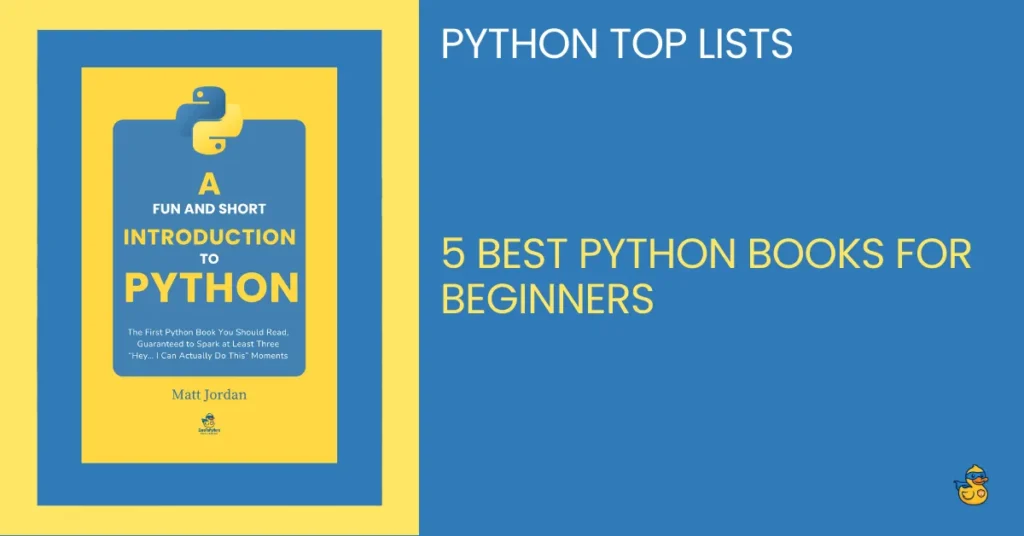
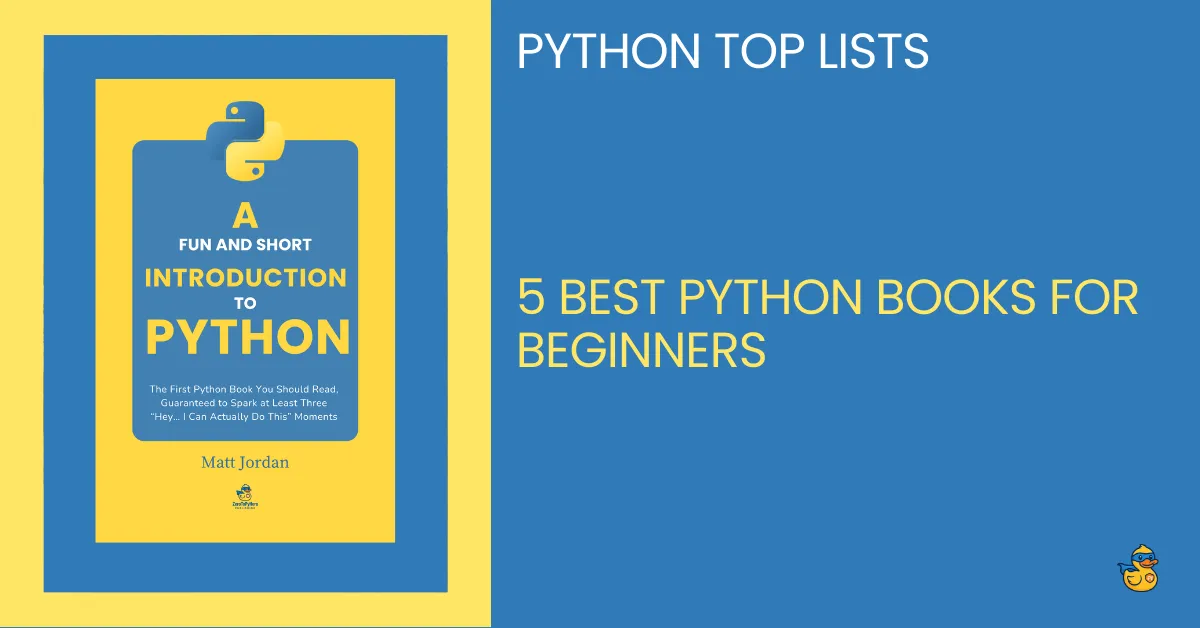
1. A Fun and Quick Introduction to Python by Matt Jordan

If you’ve ever opened a Python tutorial, felt your soul leave your body, closed the tab, and wondered if coding was only for people who eat algorithms for breakfast… this book is your safe place.
This is the book (and without a doubt top of the best Python books for beginners) for the complete beginner. The “What is a variable and why is it yelling at me?” beginner. The “please talk to me like a human” beginner.
You don’t need experience.
You don’t even need confidence.
You just need curiosity and a willingness to type a few lines of code.
This book takes you through Python step by step, using extremely clear explanations, a friendly tone, and examples that make sense even if you’ve never touched code before. Think of it like having a calm friend sitting beside you saying, “You’re doing great. Now press Enter.”
No jargon storm.
No pressure.
No gatekeeping.
Just real learning at a pace that actually feels good.
What makes it different from the usual beginner books?
It talks to you like a person, not a machine.
It’s short, fun, and easy to finish (which matters a lot for beginners).
Every chapter builds your confidence instead of assuming you already have some.
You write real Python from page one without getting overwhelmed.
It explains mistakes without making you feel like you’ve done something wrong.
By the end, you’ll understand variables, strings, numbers, loops, if-statements, functions, and more. You’ll know how Python thinks, not just how to copy text from a page.
If your goal is to finally understand Python without headaches, this is the top choice on the list of the best python books for beginners.
2. Python Crash Course by Eric Matthes

This book is basically the friendly workhorse of Python guides. It’s everywhere because it works.
If you want a more “classic” beginner book that is regarded as one of the best Python books for beginners, teaches you Python and then walks you straight into real projects, this is the one. It starts simple, builds slowly, and then suddenly you’re making games, visualizations, or small applications without realizing how far you’ve come.
It’s great for beginners who want to learn by doing rather than reading theory.
What you’ll like:
The step-by-step explanations are clean and clear.
The projects at the end make you feel like you actually know something.
It covers a lot of ground without drowning you.
What’s not perfect:
It can feel a little long if you’re brand-new and easily overwhelmed.
Some readers jump to the projects too early and end up confused.
But overall? It’s one of the most dependable beginner books ever written.
If you want something thorough but still friendly, Python Crash Course is a great companion.
And arguably one of the best Python books for beginners.
3. Automate the Boring Stuff with Python by Al Sweigart

This is the book that takes beginners from “Why bother learning Python?” to “Wow, I just automated three hours of work with ten lines of code.”
If your main goal is to make life easier, like rename files automatically, clean messy spreadsheets, scrape websites, send emails, sort images, this book is perfect.
It’s a beginner book with a twist: instead of learning Python in the abstract, you learn it through usefulness.
That’s why so many people love it. You aren’t just learning a language. You’re learning how to make your computer do your chores.
Why this book stands out:
It’s incredibly motivating. You see results fast.
You learn real-world tasks, not just “print(‘hello world’)” for the 27th time.
It’s written by someone who cares deeply about beginners.
Small heads-up:
You might need a tiny bit of patience in the early chapters if you’re completely new, because once the automation examples start, the pace picks up.
But overall: If you want to feel powerful with Python quickly, this is the one you’ll want on your desk. That’s the reason that this book belongs in the top of the best Python books for beginners.
4. Head First Python by Paul Barry

Some people learn best by reading.
Some by watching.
Some by doing.
And some by staring at a diagram of a cartoon banana talking about functions.
Head First Python is for those last people.
This book is playful, visual, and very different from the usual “block of text followed by code snippet” style. You get doodles, diagrams, side notes, examples, goofy illustrations, anything that helps your brain catch on.
If you’ve ever opened a normal programming book and thought, “Nope,” this might feel like a breath of fresh air.
What makes it worth reading:
Ideal for visual learners.
Very beginner-friendly.
The layout keeps your brain awake, even after a long day.
Why this book stands out:
If you prefer a minimal, clean textbook style, the busy pages may not be your preference.
But if you want Python delivered with personality and simplicity, this book is a strong contender.
5. Learn Python the Hard Way by Zed Shaw

Don’t let the title scare you.
This isn’t some hardcore, intimidating curriculum.
“Hard Way” simply means “learn by practicing until it sticks.”
This book is basically a long set of drills that force you to type, test, type, test, and type again. It’s structured, disciplined, and surprisingly beginner-friendly.
Where other books tell you “Here’s how lists work,” this one makes you use lists again and again until your fingers learn them by muscle memory.
Why people love it:
It teaches real discipline, which pays off later.
It gets you comfortable writing code every day.
You never get lost because each exercise builds directly on the last.
Why some people don’t love it:
It’s strict.
It won’t hold your hand emotionally.
There’s less humor and personality compared to the other books on this list.
But if you’re the kind of beginner who likes structure and routine, this book will turn you into a surprisingly confident Python user.
How to Choose the Right Python Book for You
Let’s make this simple.
Here’s a quick guide to picking the right book based on your learning style.
Choose A Fun and Quick Introduction to Python if…
You want a warm, supportive, simple book that makes Python feel human.
You want to avoid overwhelm.
You want something short, clear, and fun.
You want to feel confident instead of confused.
Choose Python Crash Course if…
You want a solid all-in-one book with projects at the end.
You like a more traditional structure.
You want something thorough.
Choose Automate the Boring Stuff if…
You want to use Python to solve real problems right away.
You learn best by doing something practical.
You like shortcuts that make life easier.
Choose Head First Python if…
You learn visually.
You want a playful, illustrated book.
You want something different from the usual dry programming books.
Choose Learn Python the Hard Way if…
You respond well to drills and structure.
You want a routine.
You want to practice your way into confidence.
The truth is simple:
The best python books for beginners are the ones that keep you going, not the ones that overwhelm you on page 3.
Pick the book that feels right for your personality, not the one that looks smartest on your shelf.
Who These Books Are For: Absolute Beginners, Curious Tinkerers, and Everyone in Between
One of the funny things about searching for the best python books for beginners is that “beginner” can mean a lot of different things.
Some people have never written a single line of code in their lives.
Some tried a few tutorials and got overwhelmed.
Some understand a little but want a structured path.
Some just want to automate boring tasks and see if coding is “their thing.”
Good news: the books on this list cover all of those people.
If you’re an absolute beginner, meaning you don’t know what a loop or a variable is, you’ll want a book that talks to you in real human language. Something friendly. Something patient. Something that won’t assume you already know half the vocabulary. Books like A Fun and Quick Introduction to Python and Head First Python shine here.
If you’re a curious tinkerer, the kind of person who likes experimenting, clicking things, and poking at code until something works, then practical books like Automate the Boring Stuff or Python Crash Course will keep you hooked. They let you build things quickly so your motivation stays high.
If you’re the disciplined type (or at least trying to be), Learn Python the Hard Way gives you a routine. It forces you to practice. It builds habits that help you write cleaner code later.
The point is: there isn’t one single best book for every beginner. That’s why lists like this work. They give you options, real options for real people.
So whether you’re brand-new, slightly experienced, or somewhere in the “I know a little but please don’t quiz me” zone, you’ll find something here that fits. Each of these titles earns its place among the best python books for beginners for a slightly different reason… and there’s a good chance one of them matches the way your brain actually learns.
This list might interest you: Top 10 Best Python Books of All Time
Let's Wrap Up: Your First Step Matters More Than the Book
Here’s a quiet secret about learning Python that people rarely admit out loud: choosing among the best python books for beginners matters far less than actually opening one and giving yourself permission to learn slowly.
Most beginners don’t get stuck because Python is too hard.
They get stuck because they bounce between tutorials, videos, and articles without ever settling into one clear path. A good book — one of the best python books for beginners — cuts through all that noise. It gives you structure. It gives you direction. And, most importantly, it gives you the feeling that you’re not alone in this.
Python looks intimidating right until the moment you type a few lines, hit Enter, and something on the screen reacts because you told it to. That small moment of control changes everything. The right book simply helps you reach that moment sooner and with less frustration.
So don’t overthink this choice.
Pick the book that feels like it speaks your language.
Pick the one whose tone makes you exhale instead of tense up.
Pick the one that makes you think, “Okay… maybe I can do this.”
That’s why these five titles show up on so many lists of the best python books for beginners. They’re not just informative — they’re approachable. They’re written with real beginners in mind, not future computer scientists who already know what a boolean is.
If you want something light, supportive, and a little funny, A Fun and Quick Introduction to Python is a wonderful place to begin. If you want hands-on projects, go with Python Crash Course. If you want to automate real tasks, choose Automate the Boring Stuff. Each book earns its spot because it helps a different type of beginner move forward confidently.
But whichever one you choose, make yourself a deal:
Start today.
Read a little.
Try a little.
Come back tomorrow and do it again.
Learning Python isn’t about being perfect.
It’s about building momentum with the smallest possible steps.
If you keep showing up, these best python books for beginners will do the rest; guiding you, encouraging you, and slowly turning your confusion into clarity.
Stick with it, and one day you’ll look up and realize something astonishing:
You’re no longer searching for beginner books.
You’re writing Python like it’s second nature.
And that journey starts with one simple decision: choosing your first book.
Complete beginner? Read this: Python for Non Programmers: How to Get Started
FAQ: Best Python Books for Beginners
1. What is the easiest Python book for absolute beginners?
If you want something gentle, clear, and written for people who feel intimidated by coding, A Fun and Quick Introduction to Python is one of the easiest places to start. It explains things in plain language and doesn’t assume you already know half the vocabulary. Other beginner-friendly picks include Head First Python for visual learners and Automate the Boring Stuff if you prefer learning by doing real tasks.
2. Can you learn Python just by reading a book?
Surprisingly, yes. As long as you write the code while you read. Books give structure and clarity, but the real learning happens when you type the examples yourself, experiment a little, and let mistakes teach you. The best python books for beginners are designed around this idea: learn a little, try a little, repeat.
3. Which Python book should I start with if I’ve never coded before?
Choose a book that speaks your language and won’t overwhelm you. A Fun and Quick Introduction to Python is perfect for total beginners who want a friendly tone. Python Crash Course is great if you want projects. Learn Python the Hard Way works if you prefer strict routines and repetition.
4. How long does it take to learn Python from a beginner book?
It depends on how consistently you show up.
Most beginners start feeling comfortable after 3–6 weeks of steady reading and practicing. You don’t need huge study sessions, even 20 minutes per day is enough. Consistency beats intensity every time.
5. Are Python books better than online tutorials?
Books give you a clear starting point and a logical order. Tutorials jump around. Books build confidence. Tutorials often assume prior knowledge. You can absolutely learn from both, but many beginners find that one good book keeps them from getting lost.
6. Do I need math to learn Python?
No. Basic arithmetic helps, but you don’t need algebra or calculus to start. Most beginner books don’t use advanced math at all. When math eventually shows up in your learning journey, you’ll understand it because the code will make sense first.
7. What’s the best Python book for beginners who want to automate tasks?
Start with Automate the Boring Stuff with Python. It’s hands-on, practical, and teaches you how to save time using Python in your everyday life — renaming files, cleaning spreadsheets, scraping websites, and more.
8. What if I get stuck while learning from a book?
That’s normal. Every programmer gets stuck — beginners, experts, everyone.
When it happens, slow down, re-read the example, type it again carefully, and test smaller pieces of code. And if frustration kicks in, take a short break. The best python books for beginners are written with this in mind, so you’ll often find small tips, explanations, or examples to help you get unstuck.
9. Which beginner Python book is best for visual learners?
Head First Python is full of diagrams, illustrations, and visual explanations that make abstract concepts easier to understand. If you learn best by seeing things mapped out, this one’s for you.
10. What’s the shortest and simplest Python book I can finish quickly?
A Fun and Quick Introduction to Python is designed to be short, friendly, and easy to complete. It’s made for people who want to learn Python without committing to a 500-page textbook. You can get through it fast and actually understand what you’re doing.
11. Should I read more than one beginner Python book?
You don’t have to, but it can help. Many beginners read one “gentle” book to understand the basics, then a second one focused on projects or real-life tasks. For example:
Start with A Fun and Quick Introduction to Python, then move on to Python Crash Course or Automate the Boring Stuff.
12. What’s the best Python book for beginners who want projects?
Python Crash Course gives you several beginner-friendly projects that gradually increase in complexity. It’s a great choice once you understand the basics and want to build something real, like games or small apps.
You might also be interested in this: 10 Best Christmas Gifts for Programmers They’ll Love