
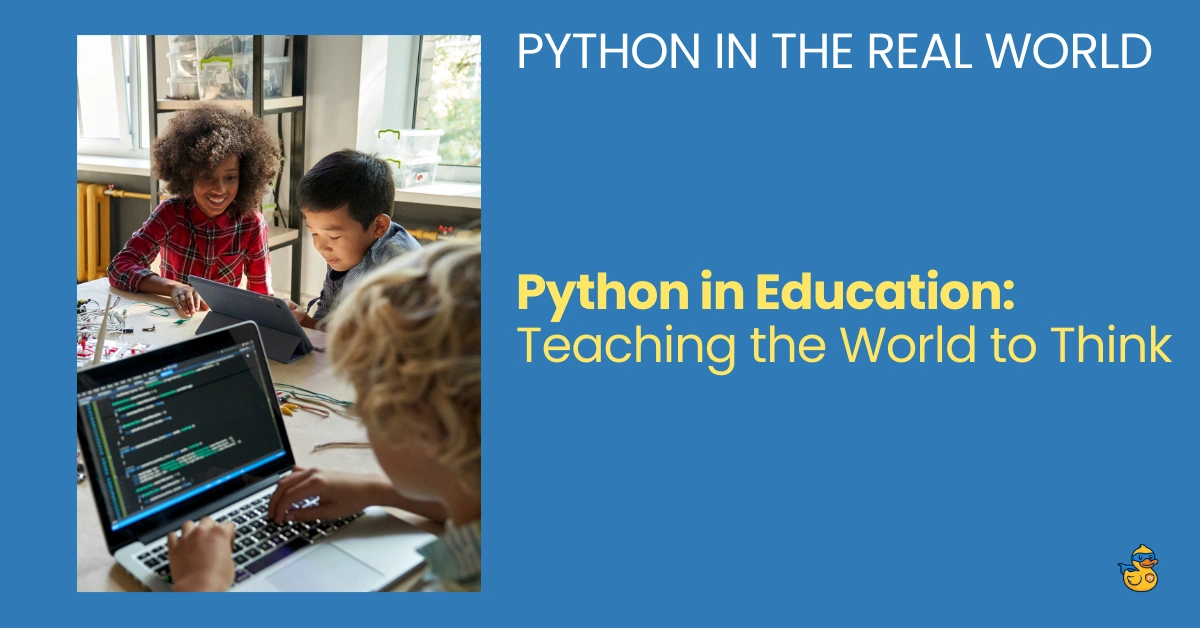

Walk into almost any classroom today, and you’ll notice something different. The chalkboards and overhead projectors are long gone. In their place you’ll see laptops, shared screens, and students quietly typing lines of code that look surprisingly readable, almost friendly. That’s Python.
Over the past decade, Python in education has gone from a niche experiment to a global standard. Schools use it to teach logic, problem-solving, creativity, and confidence. Universities use it for data science, machine learning, and research. Even primary schools have begun introducing basic Python ideas through visual tools and small games.
Why Python? Because it doesn’t scare people away. It doesn’t greet beginners with complicated symbols or strange punctuation rules. Instead, it lets students focus on the ideas behind the code, the thinking, without getting lost in technical noise. Teachers love that. Students love that. And the results speak for themselves: Python is helping an entire generation understand the digital world instead of feeling overwhelmed by it.
In this post, we’ll look at what makes Python perfect for the classroom, how different age groups use it, the tools that make learning enjoyable, and why it’s becoming as important as reading and writing in many places. If you’ve ever wondered why Python in the classroom is growing so fast, or how you can make it work for your own teaching or learning, you’ll find the answers here.
Let’s take a closer look at why this simple language has quietly become one of education’s most powerful tools.
Want to learn more about Python’s role in the world? Read this: Python in the Real World: Running the Modern Society
What You’ll Learn
If you’ve heard teachers talk about using Python in the classroom and wondered what the big deal is, this guide will give you a clear picture.
By the end, you’ll understand:
why Python in education has become the go-to choice for schools around the world
how Python makes learning logic, problem-solving, and creativity feel natural
what different age groups actually do with Python in the classroom
which tools and editors help students learn without technical headaches
the kinds of projects that keep students engaged and excited
how teachers can start using Python, even if they don’t feel “technical”
where Python in education is heading as AI, data, and digital skills become essential
This is your simple, down-to-earth guide to understanding how a friendly programming language ended up shaping the next generation of thinkers.
What Makes Python Perfect for the Classroom
If you’ve ever watched a student stare at a screen full of symbols, you know that some programming languages feel more like puzzles than tools. Python isn’t like that. It’s the language that steps aside and lets beginners focus on the actual ideas instead of wrestling with confusing syntax. That’s a big reason why Python in education has taken off so quickly. It removes the friction.
Easy to Read, Easy to Teach
Python looks almost like plain English. Students don’t need to memorize a hundred rules before they can write something that works. A simple print("Hello") already feels like a win. Teachers also appreciate that lessons aren’t spent explaining why a missing semicolon broke everything. The code stays readable, which makes learning feel less like decoding a secret message and more like solving a clear, logical problem.
Fast Results Keep Students Interested
Kids and teenagers don’t want to wait thirty minutes to see something happen. Python delivers results instantly. You write a line, run it, and something changes. That quick feedback loop keeps students engaged and curious. It turns learning into a series of small discoveries instead of long stretches of confusion.
Beginners and Professionals Use the Same Language
One of Python’s greatest strengths is that it grows with the student. A beginner might start with simple loops and variables. A high schooler might build a game with Pygame. A university student might use Python for data science or machine learning.
Professionals at NASA, Spotify, and Google use the exact same language. That continuity means students never feel like they’re being taught a “toy version” of programming.
Works on Any Device
Not every school has a computer lab with top-tier machines. Python’s so lightweight it works almost anywhere, like old laptops, Chromebooks, Macs, Windows devices, even browser-based editors. Teachers don’t need to worry about expensive software installations or system requirements. If a student can access a web browser, they can start coding.
All of this makes Python in education a remarkably inclusive and practical choice. It lowers the learning barrier, reduces technical stress, and lets the ideas take center stage, which is exactly what education should do.
How Python Actually is Used in Education
The rise of Python in education isn’t just a trend on paper. It’s happening in real classrooms, with real students, at every age level. What makes Python so powerful in schools is how easily it adapts. A seven-year-old and a university researcher can both use Python, just in very different ways.
Here’s what it looks like when Python enters the classroom.
Primary Schools
In primary school, Python usually arrives gently. Teachers introduce it through simple visual tools or tiny text-based programs that feel more like games than lessons.
Students might:
draw shapes with Turtle
make small animations
create guessing games
explore loops and patterns through colorful graphics
The goal isn’t to turn kids into programmers. It’s to help them build confidence, experiment, and understand that technology is something they can control, not just consume.
High Schools
By high school, Python becomes a full learning tool. Students start writing real programs that solve real problems. They build projects that mix creativity with logic, which is why Python in education works so well at this age.
Common projects include:
small games made with Pygame or Pygame Zero
quizzes and chatbots
simple apps that automate tasks
data projects using sports scores, music charts, or school surveys
Python also fits naturally into official curriculums. It’s part of AP Computer Science in the US, GCSE Computer Science in the UK, and digital literacy programs across Europe. Schools choose it because it’s flexible, forgiving, and practical.
Universities and Technical Schools
At the university level, Python becomes a serious academic tool. Students use it for:
analyzing data in Jupyter notebook
writing simulations for physics or engineering
exploring machine learning and AI
building web applications
researching natural sciences
visualizing data for lab work
Why Python here? Because it’s the language most researchers and tech professionals already use. Students can move directly from class projects to real-world applications without switching languages or frameworks.
Across primary schools, high schools, and universities, Python in education plays a surprisingly similar role: it helps students turn ideas into action. Whether they’re drawing a circle or analyzing a dataset, Python gives them a clear path forward, and that clarity is exactly what makes it so effective.
The Tools That Make Learning Python Fun and Simple
Teaching Python works best when students can experiment freely, poke at ideas, break things, fix them, and see results right away. The good news is that Python comes with a whole toolbox designed exactly for that. These tools lower the barrier for beginners and make Python in education feel hands-on instead of theoretical.
Here are the ones teachers and students keep coming back to.
Beginner-Friendly Editors
A good editor makes all the difference. You want something simple enough for newcomers but still useful when projects grow bigger.
Most classrooms use tools like:
Thonny
made specifically for beginners. Clear, clean, friendly.Mu Editor
gentle learning curve, built-in plotter, great for kids.Replit
runs in the browser, no installations, perfect for schools.Trinket
lets students code and share small Python projects online.Google Colab
smooth for notebooks and data-focused lessons.
These editors make starting a lesson as easy as opening a tab. No technical hurdles, no setup pain.
Visual and Interactive Tools
Younger students, and honestly, a lot of older ones, learn faster when they see something happen. That’s where visual libraries come in.
Popular choices include:
Turtle
draw shapes, patterns, and designs with simple commands.Pygame Zero
create games without needing a huge engine.Jupyter Notebooks
great for mixing code, text, and data in one place.Blockly-to-Python tools
perfect for bridging drag-and-drop coding to typed code.
These tools help students connect programming with creativity and play.
Hardware for Hands-On Learning
When students can touch the thing they’re coding, learning gets exciting fast.
Common hardware for Python in the classroom includes:
Raspberry Pi
tiny computers used for experiments, sensors, and small robots.Micro:bit
LEDs, buttons, sensors, and Python support in a pocket-sized board.Robotics kits
simple bots students can move, steer, and program.
With these tools, Python becomes more than text on a screen. It becomes a light turning on, a robot rolling forward, or a sensor capturing real data.
Why These Tools Work
The magic of these editors, libraries, and devices isn’t the technology. It’s the simplicity. They let students build something real without feeling overwhelmed.
That’s why Python in education feels so different from old-school programming lessons. Students aren’t memorizing syntax; they’re creating things they care about. And that’s where real learning begins.
Projects Students Actually Enjoy
The best way to teach Python isn’t through long lectures or endless syntax drills. It’s through projects; small, clear, and fun. When students build something they care about, the motivation takes care of itself. That’s why the most successful classrooms lean on hands-on work to make Python in education feel alive.
Here are the types of projects that consistently spark curiosity.
Games and Challenges
Games are the perfect entry point. They’re simple, visual, and rewarding.
Students quickly learn how loops, variables, and conditions work by making things happen on screen.
Popular beginner-friendly projects include:
number guessing games
rock–paper–scissors
reaction-time challenges
simple Pygame or Pygame Zero creations
text-based adventures
Games make coding feel like play. That’s a powerful teaching tool.
Data Exploration
Older students love working with data because it connects coding to the world they know.
A few great classroom examples:
analyzing sports stats
looking at music or movie trends
exploring weather data
tracking class surveys or polls
pulling simple datasets from the web
Python’s data tools are simple enough for beginners but strong enough to feel real-world. Students get a taste of data science without even noticing it.
Small Automation Tasks
Automation projects show students that coding solves actual problems, even tiny ones.
They might build:
a file organizer for their computer
a password generator
a random name picker for group work
a simple “to-do” app
programs that clean or format text
These projects teach practical thinking: “What do I want this program to do, step by step?”
Creative Coding
Creative work keeps the energy high. Students get to see their ideas turn into something visual or playful.
Great examples include:
Turtle artwork
simple animations
ASCII art generators
random story or poem generators
small drawing tools
Creative coding removes the fear of being wrong. Mistakes become part of the experiment.
That mindset, exploration over perfection, is exactly why Python in education works so well.
How Teachers Can Start Teaching Python (Even Without Feeling “Techy”)
A lot of teachers worry they need to be programming experts before bringing Python into the classroom. They don’t. Not even close. In fact, one of the biggest strengths of Python in education is that it welcomes teachers of all backgrounds. You don’t need years of experience. You just need a willingness to explore alongside your students.
Here’s how to begin without feeling overwhelmed.
Start With Simple Wins
Don’t open with a heavy lesson about variables, loops, or functions. Start with something that shows an instant result, like a quick “Hello” message, a simple Turtle drawing, or a tiny guessing game. When students see something happen right away, the energy in the room changes. They lean in instead of leaning back.
And you get to relax, too. Small successes build comfort for everyone.
Teach Concepts Through Projects
Students learn faster and better when they’re building something real. Instead of teaching syntax first, let the project introduce the idea naturally. A guessing game teaches input and conditions without needing a long explanation. A Turtle drawing introduces loops more clearly than any diagram ever could.
Projects make concepts click. Syntax follows.
Let Students Explore
Python is forgiving enough for experimentation. If a student tries something strange, let them. If they break the code, that’s progress, not failure. The classroom becomes a place where curiosity is rewarded instead of punished.
This approach works because Python in education naturally encourages exploration. When the language feels simple, students feel confident trying new things.
Lean on the Global Python Community
Teachers don’t have to do this alone.
There are thousands of free resources created by educators around the world:
ready-made lesson plans
classroom activities
beginner challenges
video-based walkthroughs
cheat sheets and practice worksheets
The Python community is one of the friendliest in tech. If you’re stuck, someone out there has already solved the problem, and shared the solution for free.
The goal isn’t to be a technical expert. The goal is to guide the class, encourage curiosity, and build a space where students feel capable. Python takes care of the rest.
The Future of Python in Education
If you look at how schools and universities are changing, one thing becomes clear: Python isn’t just a classroom trend. It’s becoming part of how students learn to understand the world. As technology keeps shaping daily life, Python in education is turning into a kind of modern literacy, something students use not just to code, but to think.
Here’s where things are heading.
AI and Data Literacy for Everyone
Artificial intelligence and data aren’t just topics for engineers anymore. They’re everyday realities. Students see AI in their phones, social media feeds, games, and online tools. Python makes those ideas approachable instead of intimidating.
Teachers can already introduce simple AI concepts through friendly tools and small datasets. A decade ago, that would’ve required a lab full of expensive equipment. Today, it runs in a browser.
Python is becoming the doorway to understanding how modern technology works, and how to use it responsibly.
Learning Anywhere, Anytime
Remote and hybrid learning changed classrooms permanently. Python fits that shift better than almost any other language.
It runs in:
browsers
cloud notebooks
low-cost devices
shared screens
Students can write code on a school computer, finish it on a tablet at home, and test it on a laptop later. That flexibility makes Python in education far more practical than high-maintenance traditional tools.
Digital Literacy Beyond Coding
Not every student needs to become a programmer, but every student benefits from understanding logic, structure, and problem-solving. Python teaches those skills naturally.
It helps students learn how to:
break big problems into small steps
think clearly about cause and effect
experiment and adjust
stay calm when things don’t work the first time
Those are life skills, not just coding skills.
A Tool for a Changing World
As new careers appear in data, automation, science, and design, Python is giving students a head start. It’s accessible, flexible, and tied to real-world applications. Whether a student wants to work in healthcare, music, robotics, finance, or storytelling, Python has a place in that path.
And that’s the real future of Python in education: it gives students the confidence to shape ideas into something real, no matter what field they choose.
Let's Wrap Up: Python in Education Is More Than a Trend
When you step back and look at everything we’ve covered, one thing stands out clearly: Python in education isn’t just a helpful tool. It’s becoming a foundation for how students learn, think, and solve problems. Classrooms all over the world are discovering that Python makes technology feel understandable instead of intimidating. It gives teachers a language they can guide, and students a language they can grow with.
What makes Python in education so powerful is how naturally it fits into the learning process. It doesn’t overwhelm beginners. It doesn’t demand complicated setups. It doesn’t punish experimentation. Instead, it rewards curiosity, patience, and problem-solving: the exact skills students need in a digital world.
Whether it’s in primary school drawings, high-school game projects, or university research notebooks, Python in education has shown that a simple language can unlock big ideas. It lights up that moment when a student runs a program and realizes, “I made that happen.” That spark matters more than perfect syntax or advanced algorithms. It’s the moment confidence begins.
And as technology becomes part of every career path, Python in education is helping students build a foundation they’ll carry long after they leave the classroom. It’s giving them tools to understand data, experiment with AI, create art, build games, and explore problems with a clearer mind.
In the end, Python in education isn’t about turning every student into a programmer. It’s about teaching them how to think in steps, stay curious, and approach problems with creativity instead of fear. It’s about helping the next generation feel capable in a world where technology keeps growing.
Python won’t replace good teaching, but it will continue empowering it. One line, one project, and one breakthrough at a time.